Innovation. Trust. Scale.
The Evolution of Social Media: From Connection to Communities Built on Trust

Date
Feb 28, 2026
Author
Ananya Anchan
Social media didn’t start as an industry.
It started as a need.
A need to connect. To belong. To express. To be seen.
Over time, that simple human desire transformed into one of the most powerful digital ecosystems in the world. And every phase of its evolution tells founders something important: platforms win when they solve a real, timely problem — not when they chase noise.
Let’s walk through this journey.
Phase 1: The Connection Revolution
In the early 2000s, the internet was growing fast — but it still felt disconnected. Emails existed. Forums existed. But there was no structured digital identity.
That’s when platforms like Facebook exploded.
Facebook didn’t try to serve everyone initially. It focused on one niche: college students.
The problem was specific:
Students wanted a verified digital directory to connect within campuses.
It was exclusive. It was identity-based. It solved a real problem — and that’s why it scaled.
Similarly:
LinkedIn solved professional identity.
Twitter solved real-time public expression.
These weren’t feature-heavy platforms. They were problem-focused platforms.
And they felt revolutionary because they answered a clear need.
Phase 2: The Engagement & Attention Economy
Once everyone was connected, the next battle wasn’t access — it was attention. Feeds became algorithmic. Platforms optimized for time spent. Social validation (likes, comments, shares) became psychological triggers.
Instagram identified a shift early.
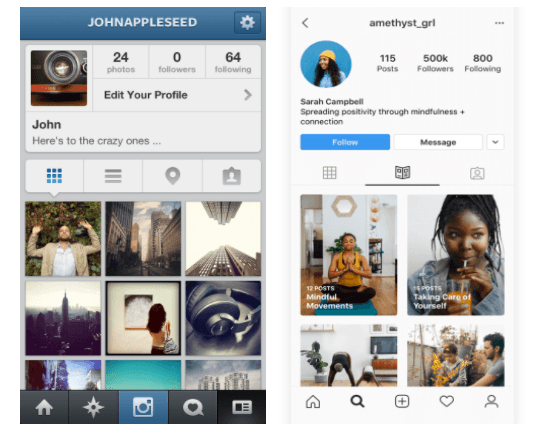
The problem it solved:
People wanted visual storytelling without complexity.
It removed friction. Simple filters. Instant posting. Clean feed.
It wasn’t just another social network — it simplified self-expression through visuals. That simplicity drove massive adoption.
But as this era matured, something changed. Feeds became crowded. Content became curated. Authenticity started fading. Users began feeling overwhelmed. And that emotional fatigue created space for the next shift.
Phase 3: Niche Communities & Real-Time Experiences
People didn’t just want to post anymore.
They wanted to belong somewhere meaningful.
That’s where Clubhouse made an impact.
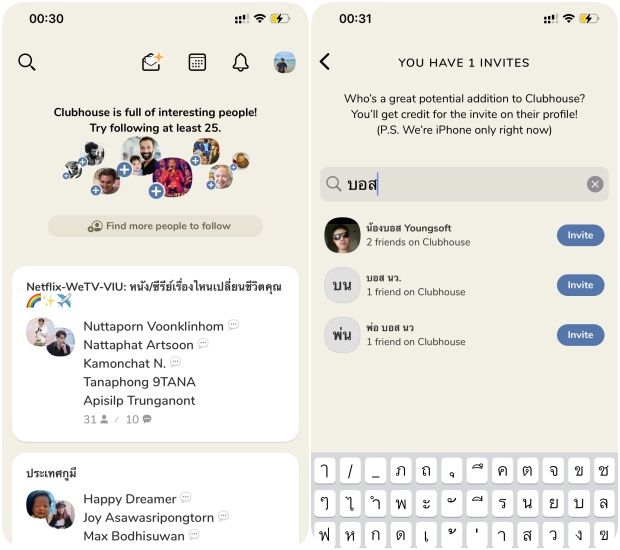
At a time when the world was physically isolated, Clubhouse introduced live audio rooms.
No filters. No editing. No performance pressure.
The problem it solved:
“How can people have real, unfiltered conversations online?”
Its invite-only model created exclusivity. Its niche rooms created belonging. For a while, it felt intimate and refreshing. Another strong example is Discord, which focused heavily on gamers before expanding. It didn’t try to become “another Facebook.” It built deep community tools for a specific audience.
This phase taught founders an important lesson:
Community depth beats mass broadcasting.
But again, innovation alone wasn’t enough. Platforms that couldn’t evolve beyond initial excitement struggled with retention.
Phase 4: The Trust & Security Era
Today, social media has entered a more serious phase.
Users are aware of:
Data misuse
Fake profiles
Online harassment
Privacy violations
Now the core question isn’t:
“What can I post?”
It’s:
“Is this platform safe?”
Platforms like WhatsApp leaned heavily into end-to-end encryption as a trust differentiator. Privacy became part of their positioning. Even Telegram grew rapidly by emphasizing control, security, and community-based channels. Security is no longer backend engineering. It’s a product promise.
If users don’t feel safe, they don’t stay — no matter how good the UI looks.
Trust has become the new growth engine.
What This Evolution Teaches Startup Founders
Looking at this journey, one pattern is clear:
Every successful social platform identified a specific human frustration and built around it.
Not around features.
Not around trends.
Around problems.
If you're building today, ask yourself:
What emotional gap are we filling?
Who feels unheard, unsafe, or underserved?
Why would someone choose us over established giants?
For example:
If creators struggle to monetize niche audiences → build structured paid communities.
If professionals are tired of noisy feeds → create verified domain-only spaces.
If users want anonymity but fear harassment → design anonymous systems with strong moderation and reputation scoring.
If regional communities lack representation → build language-first ecosystems.
A powerful litmus test:
If your app shuts down tomorrow, will your users feel loss — or inconvenience?
Loss means you solved something real.
Inconvenience means you built a clone.
The Future: Experience + Trust + Scalability
The next generation of social platforms will win by combining:
Focused niche communities
Built-in monetization for creators
Real-time engagement tools
Strong data protection
Scalable backend infrastructure
Virality will help. But infrastructure and retention will decide survival. Social media is no longer about building the loudest platform.
It’s about building the safest, most meaningful one.
Building the Next Social Platform?
Creating a social media app today requires more than UI design. It requires:
Clear problem validation
Secure system architecture
Real-time communication expertise
Scalable backend planning
Smart retention loops
Thoughtful community design
If you're planning to build a niche community platform, a real-time audio/video app, or a secure, monetizable social ecosystem — we can help you turn that idea into a scalable product.
From product strategy to deployment, we focus on building platforms designed for growth, trust, and long-term retention — not just initial downloads.
If you're ready to build something meaningful in the social media space, let’s make it happen.
Email us on : contact@arpahub.in
Find our Products here: arpahub.in
More Articles