Idea vs Execution
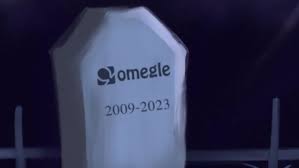
The Downfall of Omegle: A Lesson in Building Social Platforms Right
Date
Feb 26, 2026
Author
Ananya Anchan
In 2009, a simple website did something revolutionary.
You clicked one button.
In 2009, a simple website did something revolutionary.
You clicked one button.
And you were instantly connected to a stranger anywhere in the world.
No profile.
No followers.
No algorithm.
Just raw, unpredictable human interaction.
That was Omegle.
At its peak, millions of users logged in daily. It became a cultural phenomenon — YouTube reactions, reaction videos, curiosity-driven late-night sessions. For many users, it was their first experience of anonymous digital connection.
But in 2023, Omegle shut down.
Not because the idea failed.
Because the execution couldn’t survive the world it helped create.
Let’s break down what really happened — and what startup founders must learn from it.
1. The Concept Was Brilliant
Omegle solved a real human need:
Curiosity about strangers
Escaping existing social circles
Instant connection without commitment
A break from algorithm-driven feeds
It was the opposite of performance-based social media.
And randomness is powerful.
Even today, stranger-calling apps, AI companion platforms, and anonymous chat products are built on the same psychological trigger.
So the idea wasn’t wrong.
The infrastructure around it was incomplete.
2. Where Things Started Breaking
As user numbers grew, so did problems.
And they weren’t minor.
A. Weak Moderation Systems
Omegle relied largely on:
Basic keyword filters
Limited AI detection
Manual user reporting
But anonymous platforms attract high-risk behavior. Without strong moderation architecture, abuse scales faster than growth.
The internet of 2009 was very different from the internet of 2023.
User awareness increased.
Governments became stricter.
Legal exposure expanded.
Omegle didn’t evolve fast enough.
B. Child Safety & Legal Pressure
One of the biggest issues was underage access and exploitation concerns.
Intent doesn’t protect a platform.
Outcomes define liability.
With stronger global child safety regulations and digital protection laws, the legal and financial pressure intensified.
When legal risk outweighs operational sustainability, shutdown becomes inevitable.
C. Pure Anonymity Without Control Layers
Anonymity was Omegle’s biggest strength.
It was also its biggest weakness.
Modern platforms use:
Device fingerprinting
Backend identity mapping
Behavioral risk scoring
Tiered anonymity models
Users may feel anonymous.
But platforms still maintain control architecture behind the scenes.
Omegle remained in absolute anonymity mode.
That model worked for early growth.
It didn’t work for long-term survival.
D. No Trust Architecture
Today, scalable social platforms invest heavily in:
Trust & Safety teams
AI + human moderation hybrids
Transparent community enforcement
Escalation frameworks
Risk analytics systems
Omegle remained minimal.
Minimal became fragile.
3. The Real Reason for Shutdown
The official shutdown note mentioned:
Financial strain
Psychological pressure
Ongoing lawsuits
But the deeper reason was simple:
The digital ecosystem matured.
The platform didn’t mature with it.
The idea was timeless.
The compliance model wasn’t.
4. What Startup Founders Must Learn
If you’re building in:
Social media
Random video calling
Anonymous chat
AI companion apps
Live interaction platforms
This case study is critical.
Lesson 1: Growth Without Governance Is Risk
User acquisition means nothing if moderation, compliance, and safety don’t scale alongside it.
Virality without control becomes liability.
Lesson 2: Anonymity Must Be Engineered
Anonymity should be a user experience layer, not a backend reality.
Controlled anonymity protects:
Users
Investors
Founders
Brand longevity
Lesson 3: Regulation Is Strategy, Not Obstacle
Compliance is not friction.
It is infrastructure.
Platforms built regulation-ready from Day 1 survive longer.
Lesson 4: Trust Is Now a Product Feature
In 2009, speed was the feature.
In 2026, safety is the feature.
Users stay where they feel protected.
Retention is built on trust.
Final Thought
Omegle didn’t fail because connecting strangers was wrong.
It failed because connecting strangers without structure is unsustainable.
The market still wants spontaneous human connection.
But the next generation of platforms must be built smarter.
Want to Build the Next-Gen Social Platform?
If you’re planning to build:
A random video calling app
An anonymous chat platform
A stranger discovery network
Or any bold social media concept
Email us on: contact@arpahub.in
Product demo: omegle-clone
The opportunity still exists.
What matters is execution — compliance-ready architecture, strong moderation systems, scalable backend control, and future-proof infrastructure.
If you have such an idea, we help turn it into a structured, secure, and scalable reality.
From concept validation and product architecture to development and deployment — we build social platforms designed to grow responsibly.
Because the next Omegle won’t fail due to the idea.
It will win because of the foundation.
More Articles