Clubhouse
What Startups Can Learn from Clubhouse’s Boom and Bust

Date
Aug 31, 2025
Author
Ananya Anchan
In our last blog, The Rise and Fall of Clubhouse: Why Elon Musk’s Hype Didn’t Last, we uncovered how Clubhouse’s hype-driven rise eventually led to its downfall. But the bigger question for founders isn’t just why it happened — it’s what lessons can be drawn to avoid the same fate.
Because knowing why Clubhouse failed is only half the story. The real value lies in understanding what entrepreneurs and startup founders can learn from its meteoric boom and sudden downfall. Every misstep is a blueprint of “what not to do” — and every success, however short-lived, is a clue to building something stronger, more sustainable, and future-proof.
So, let’s dive deeper into the lessons that Clubhouse unknowingly left behind for today’s innovators — lessons that could mean the difference between fading into obscurity or building the next big thing.
The Backstory of Clubhouse
For those who don’t know the backstory — Clubhouse was an invite-only social audio app that let people join live conversations in virtual “rooms.”
What made it explode was exclusivity + hype. In 2020 and early 2021, when the world was stuck at home, the idea of dropping into live, unscripted conversations with entrepreneurs, celebrities, and influencers felt fresh and exciting. The app became a digital stage where Elon Musk, Mark Zuckerberg, and Oprah casually popped in to chat — and suddenly, everyone wanted an invite.
At its peak, Clubhouse downloads skyrocketed to 10 million installs in February 2021 alone, and its valuation shot past $4 billion within a year. It wasn’t just an app; it was a cultural wave fueled by curiosity, FOMO, and star power.
The Downfall of Clubhouse
From millions of downloads to a steady decline, Clubhouse’s fall was as dramatic as its rise. By mid-2021, the very factors that fueled its hype — exclusivity, novelty, and star power — began working against it.
As COVID restrictions eased and people returned to their normal routines, the need for endless live conversations started to fade. At the same time, competitors like Twitter Spaces and Facebook’s Live Audio Rooms quickly replicated the format, offering similar features to existing massive user bases. Clubhouse suddenly didn’t feel so unique anymore.
The numbers tell the story best: after peaking at over 10 million downloads in February 2021, installs plummeted to just 3.8 million by June 2021 and kept falling. Daily active users dropped sharply too, with retention becoming one of its biggest struggles. What once looked like a $4 billion revolution now resembled a fad losing steam.
Reasons Behind Clubhouse’s Downfall
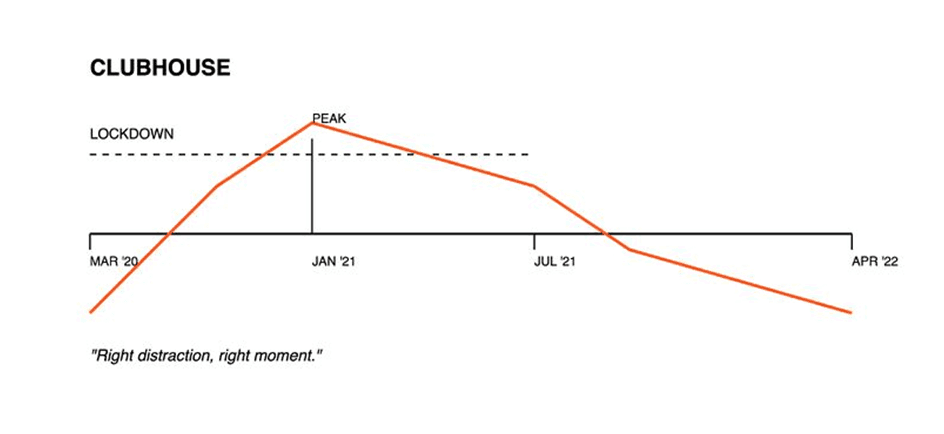
While Clubhouse had the right idea at the right time, several cracks in its foundation became evident as the hype faded. Here are the key reasons:
1. Overdependence on Hype & Exclusivity
Clubhouse’s invite-only model created early buzz, but once the novelty wore off, it limited long-term growth. The hype driven by celebrities and influencers wasn’t sustainable, leading to a sharp drop in daily engagement.
2. Declining User Retention
Despite hitting 10M downloads in Feb 2021, active users quickly declined. By mid-2021, retention rates dropped below 30%, meaning most users left after trying the app once or twice.
3. Increased Competition
Twitter launched Twitter Spaces in late 2020 and rolled it out aggressively by 2021. Facebook, Spotify, and LinkedIn all introduced audio features, leveraging their massive existing user bases. Clubhouse struggled to compete as a standalone app with no broader ecosystem.
4. Lack of Monetization & Creator Incentives
While platforms like YouTube and TikTok rewarded creators, Clubhouse had limited ways for hosts to earn. This discouraged creators from investing their time long-term, leading to fewer high-quality rooms.
5. Technical & Accessibility Limitations
Initially, the app was iOS-only, leaving out millions of Android users. Poor moderation led to issues with misinformation and harassment, turning many users away.
6. Shift in User Behavior Post-Pandemic
During lockdowns, people had time for long conversations. As normal life resumed, users preferred shorter, snackable content formats like Reels, Shorts, and TikToks.
The Result: Clubhouse downloads fell from 10M in February 2021 to under 1M per month by late 2021, and by 2022, daily active users had dropped by more than 80%.
How Startups Can Overcome These Challenges
Clubhouse’s downfall isn’t just a story of failure — it’s a roadmap of pitfalls every entrepreneur should avoid. Here’s how startups can overcome these challenges and build stronger, more sustainable platforms:
1. Don’t Rely on Hype Alone — Build Long-Term Value
The Mistake: Clubhouse thrived on celebrity hype and exclusivity but had no strong retention plan once the buzz died down.
The Solution: Focus on creating lasting value through features users need, not just what feels exciting in the moment. Think of how LinkedIn continues to thrive because it solves a consistent professional networking need.
2. Prioritize Retention Over Downloads
The Mistake: Millions downloaded Clubhouse, but most didn’t stay.
The Solution: Track daily active users (DAU), session duration, and return rates more than vanity metrics like total installs. Introduce habit-forming mechanisms (e.g., personalized recommendations, gamification, or loyalty perks) to keep users engaged.
3. Build Around Ecosystems, Not Standalone Features
The Mistake: Clubhouse offered audio chat, but competitors integrated the same feature into existing platforms where users already spent time.
The Solution: Either create a broader ecosystem of features or find a unique niche where your product can’t easily be copied. For example, Discord thrives because it built entire communities around voice + text, not just audio rooms.
4. Empower Creators with Monetization Opportunities
The Mistake: Clubhouse gave creators exposure but no financial incentive to stay.
The Solution: Design revenue-sharing models early — subscriptions, tipping, ad revenue, or exclusive paid content. Look at how TikTok and YouTube retained creators by rewarding them directly.
5. Scale Access Early & Balance Quality with Quantity
The Mistake: iOS-only access limited Clubhouse’s growth and frustrated eager users. By the time Android support arrived, momentum had already faded.
The Solution: Launch inclusively across platforms or at least with a clear rollout plan. Also, ensure strong moderation tools so that scale doesn’t compromise content quality or community trust.
6. Adapt to Changing User Behaviour
The Mistake: Clubhouse bet everything on long-form live audio while users were moving towards short, on-demand formats.
The Solution: Keep a pulse on user behaviour through feedback loops, analytics, and A/B testing. Don’t hesitate to pivot — even giants like Instagram adapted by embracing Stories and Reels when attention spans shifted.
7. Ensure Quality Content & Strong Regulation
The Mistake: Clubhouse struggled with repetitive, low-value content and lacked effective moderation. In some cases, unregulated rooms even led to harassment or violent discussions, which damaged trust.
The Solution: Prioritize content diversity and moderation. Use algorithms and human oversight to filter spammy or harmful content, while encouraging creators to produce unique, high-quality discussions.
Overall Lessons for Startups from Clubhouse
Takeaways from Clubhouse’s Success
1. Exclusivity drives curiosity: The invite-only model created massive FOMO — a reminder that scarcity can be a powerful growth hack if used strategically.
2. Timing matters: Launching during the pandemic, when people craved new ways to connect, gave Clubhouse an initial boost. Right idea + right timing = explosive traction.
3. Celebrity endorsement works: Big names like Elon Musk and Oprah fueled global awareness overnight — proof that influencer-driven virality can skyrocket adoption.
4. Real-time audio interactions were revolutionary: Clubhouse solved a long-standing problem: how to host large-scale live conversations without the rigid format of meetings or the dependency on parallel YouTube streams. It proved that building a distinct product that addresses a real gap can completely reshape user behaviour and unlock new markets.
Lessons from Clubhouse’s Failure
5. Hype fades — value lasts: Without deeper utility, the buzz wore off quickly.
6. Retention > downloads: Millions tried it; few stayed. Long-term engagement is the real success metric.
7. Creators need incentives: Without monetization, creators drifted to platforms that paid them.
8. Content & moderation are everything: Repetitive rooms and unchecked toxic discussions drove people away.
9. Adapt or die: Clubhouse clung to its original model while user preferences shifted to short-form, on-demand content.
Bottom Line: Clubhouse is a rare case study where success and failure walked hand in hand. Its meteoric rise showed the power of exclusivity, timing, and product distinctiveness. Its downfall reminded us that without retention, monetization, and adaptability, even the brightest startups can fade. For founders, the ultimate lesson is this: innovate boldly, but sustain wisely.
Our Solution: A Smarter Way to Build Your Own Clubhouse
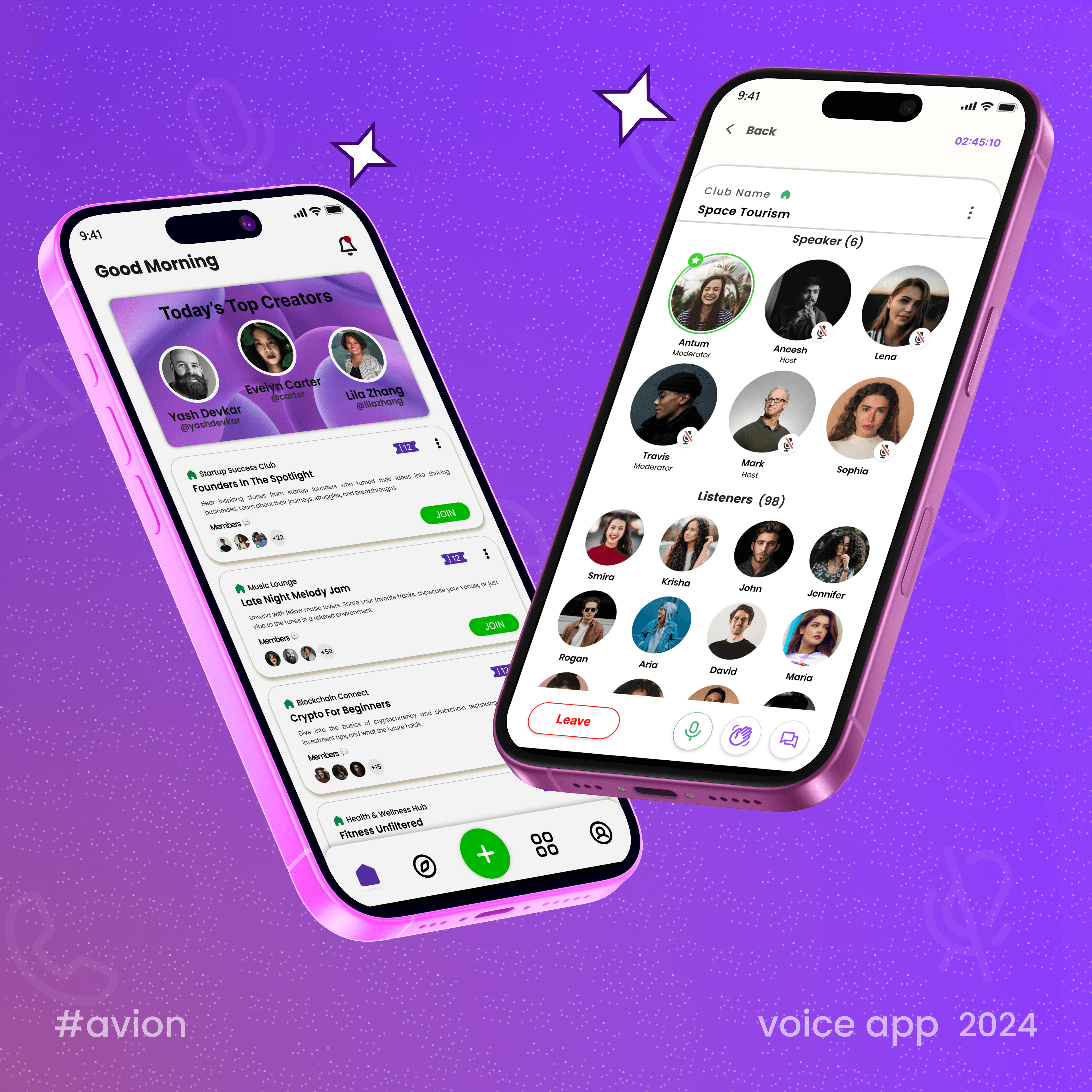
At Arpa, we believe the idea behind Clubhouse wasn’t wrong — it was incomplete. The real-time audio revolution proved the demand, but sustainability came down to trust, monetization, and ownership. That’s exactly where our white-label solution steps in.
With our product, you get a ready-to-customize foundation to launch your own audio-first social platform — designed to fix what Clubhouse missed:
Paid Club Creation – Let your users create exclusive communities and monetize their expertise.
Ticketed Rooms – Enable premium, one-time conversations where creators can charge for access.
Verified-Only Spaces – Build instant trust by ensuring conversations happen in secure, verified environments.
Unlike closed platforms, our solution gives you the freedom and ownership to launch under your own brand. No need to start from scratch — you get a scalable Flutter source code that’s already battle-tested, and can be fully customized for your vision.
Ready to launch your own version of Clubhouse with a business model that works?
Check it out here: Avion – Flutter Realtime Voice Chat App
Conclusion
Clubhouse may have stumbled, but its journey proved one thing — the world craves authentic, real-time conversations. For entrepreneurs and startups, the real lesson lies in balancing innovation with sustainability: unique features, a solid revenue model, and trust at the core.
The rise and fall of Clubhouse isn’t just a cautionary tale — it’s also an inspiration. Build on what worked, fix what didn’t, and you’re already one step closer to creating the next big success story.
More Articles